It Is Suitable For
· Those in Chiang Mai looking to conceal small chips or cracks in teeth.
· Those who want to close small gaps or spaces between teeth.
· Those who want to improve tooth shape or proportion.
· Those who wish to cover discolouration or uneven enamel.
· Those who wish to get a minimally invasive dental cosmetic solution.
What Is Composite Bonding?
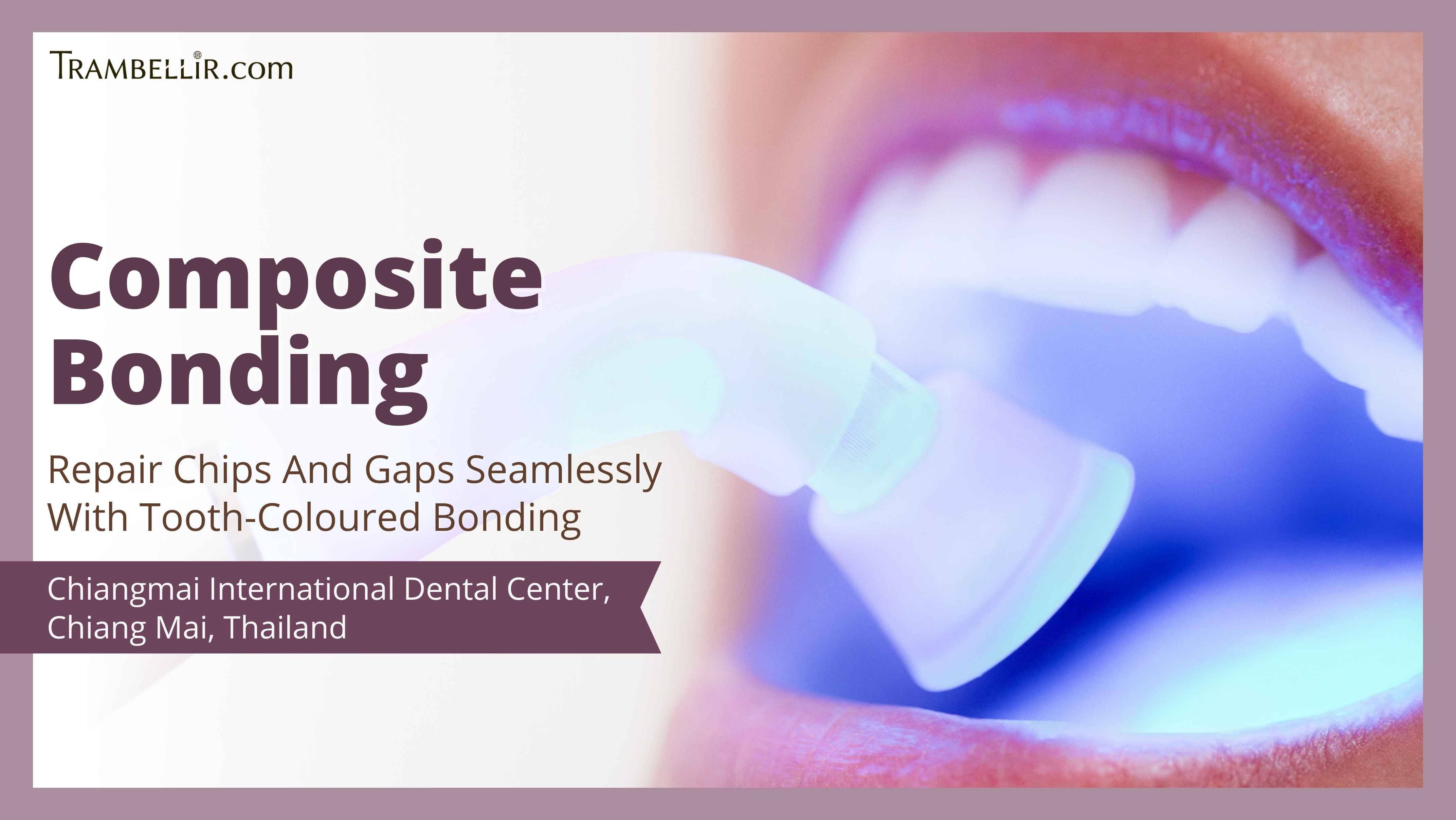
Composite Bonding is a cosmetic dentistry procedure that uses tooth-coloured composite resin to improve the appearance of teeth. The resin is carefully applied, sculpted, and polished to enhance the tooth’s shape, size, or colour. It is often used to repair chips, close small gaps, cover discoloration, or reshape uneven teeth. Unlike dental veneers or crowns, Composite Bonding is minimally invasive and completely reversible, making it a quick and natural-looking option for smile enhancement.
How It Works
During Composite Bonding procedure, the tooth surface is first cleaned and slightly roughened to help the bonding material adhere properly. A conditioning liquid is applied, followed by a soft, tooth-coloured composite resin. The dentist shapes and smooths the resin to match the natural contour of the tooth, then hardens it using a special curing light. Once hardened, the bonded area is polished for a smooth and natural finish. The procedure is performed chairside without the need for a dental laboratory, typically taking 30 to 60 minutes per tooth.
Composite Bonding Procedure
1. Consultation and examination will be conducted.
2. Tooth shade will be selected, then the tooth surface will be gently roughened.
3. Composite resin will be placed, shaped, and sculpted.
4. Curing light will be used to harden the material.
5. Tooth will be polished and refined.
6. Final bite and aesthetics will be checked.
7. Post-care instructions will be provided.
Advantages and Limitations of Composite Bonding
<Advantages>
· Enhances teeth shape and colour
· Strengthens and protects minor damaged areas
· Offers aesthetic and natural appearance
· Requires none enamel removal
· May be more cost-effective than dental veneers or crowns
<Limitations>
· Less suitable for extensive damage or heavy biting pressure areas
FAQ
Q1: How long does Composite Bonding last?
A1: Composite Bonding typically lasts 3 to 10 years, depending on the location of the bonded tooth, oral hygiene habits, and lifestyle factors such as diet or teeth grinding.
Q2: What teeth are not suitable for Composite Bonding?
A2: Teeth with severe decay, extensive fractures, or significant structural damage are generally not suitable for Composite Bonding.
Q3: Do teeth decay under Composite Bonding?
A3: Tooth decay can occur around or beneath the bonding if proper oral hygiene is not maintained. Brushing, flossing, and routine dental check-ups are essential to prevent plaque buildup and maintain the bonded area.
Q4: How painful is Composite Bonding?
A4: Composite Bonding is virtually painless. The procedure typically does not require anesthesia because it does not affect the tooth’s nerves.
Q5: Will my teeth look natural after Composite Bonding?
A5: Yes, Composite Bonding uses tooth-coloured resin that is precisely matched to the natural shade of the teeth. When polished, it blends seamlessly with surrounding enamel, creating a smooth, natural-looking finish.
Clinic Information
[Clinic Name] Chiangmai International Dental Center
[Location] Chiang Mai, Thailand
[Nearest Station/ Nearest Tourist Destination] 15 mins driving distance from CNX airport; Walking distance to hotel accommodations and shopping malls
[Clinic Opening Time] Monday - Saturday (10:00AM - 8:00PM); Sunday (10:00AM - 6:00PM)
Terms of Service
Trambellir is a health tourism platform and does not in any way provide, promote, or sell any
medication or medical treatment to the Customers.
Customers are advised to contact the healthcare providers directly for any enquiries related to
medical treatments.