It Is Suitable For
· Those in Seoul looking to detect cavities early.
· Those who want to check for hidden infections or abscesses.
· Those who want to monitor bone loss or gum disease.
· Those who wish to plan treatments like dental implants, braces, or dentures.
· Those who wish to track healing after root canal or bone grafts.
What Is Dental X-Ray?
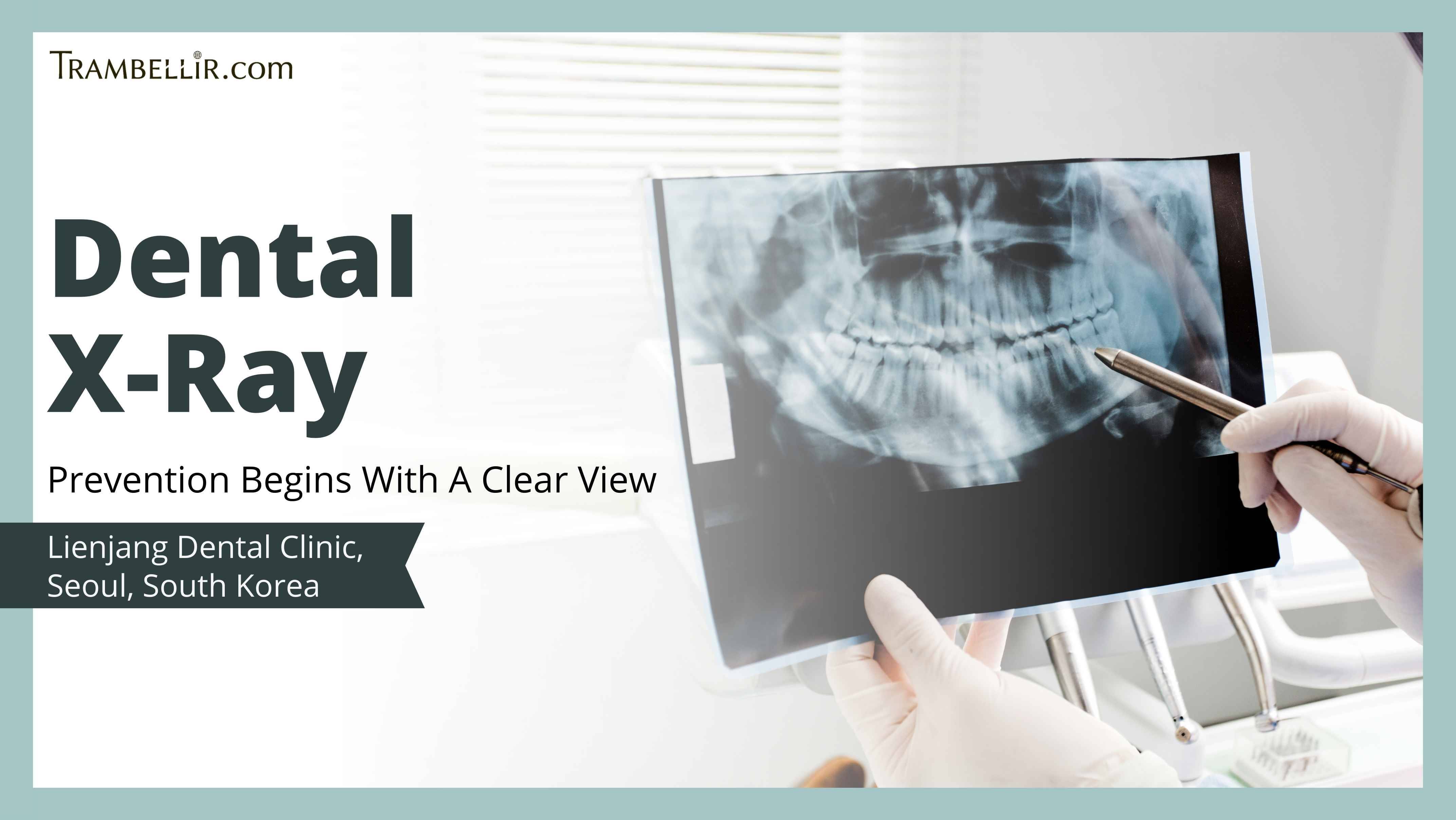
Dental X-Ray – also known as dental radiograph – is a diagnostic imaging technique that captures detailed images of the teeth, jawbone, and surrounding structures. It allows the dentist at our affiliated clinic to see areas that are not visible during a routine oral examination, including tooth roots, nerves, jawbone, and even nearby sinus areas.
Its main function is to detect oral health problems at an early stage. Dental X-Ray can identify cavities (especially between teeth), decay beneath fillings, bone loss due to gum disease, impacted or unerupted teeth, abscesses, cysts, as well as some tumors. It is also essential for planning and evaluating treatments such as dental implants, orthodontic braces, dentures, root canals, and bone grafts. The benefits include earlier diagnosis, more accurate treatment planning, and improved long-term oral health outcomes.
How It Works
Dental X-Ray works by using a small, controlled amount of radiation to create images of the internal structures of teeth and jaws. The X-ray beam passes through soft tissues and is absorbed at different levels by teeth and bone, producing a contrasting image that highlights areas of concern such as decay, infection, or bone changes. The images are captured either on traditional film or, more commonly today, on digital sensors that transmit the image directly to a computer for immediate viewing and analysis.
There are two general approaches to taking dental X-rays; Intraoral and Extraoral. Intraoral X-rays are taken with the sensor or film placed inside the mouth to capture detailed views of individual teeth and supporting bone; whereas Extraoral X-rays are taken with the sensor positioned outside the mouth to provide broader images of the jaw, skull, and surrounding structures. The choice between these methods depends on the purpose of the examination and the area that needs evaluation.
Dental X-Ray Procedure
1. Consultation and oral assessment will be conducted.
2. A lead apron and possibly a thyroid collar will be placed.
3. The X-ray sensor or film will be positioned inside or outside the mouth.
4. The images will be reviewed and explained.
5. Recommendations and follow-up will be provided.
Advantages and Limitations of Dental X-Ray
<Advantages>
· Enhances early detection of cavities
· Improves diagnosis of hidden infections
· Supports dental treatment planning
· Reduces risk of untreated dental problems
· Monitors bone health
· Reduces radiation exposure
· Improves long-term oral health
<Limitations>
· Exposure to low levels of radiation
· May not detect all types of oral cancer
· Not always recommended during pregnancy unless necessary
FAQ
Q1: How often do I need Dental X-Ray?
A1: It depends on your oral health. If your teeth and gums are healthy, Dental X-Ray is usually recommended every 6 to 18 months.
Q2: Can I see a tooth infection on a Dental X-Ray?
A2: Yes, Dental X-Ray can show infections such as abscesses, which often appear as dark areas near the tooth root or between the tooth and gum.
Q3: Are too many Dental X-Ray harmful?
A3: Dental X-Ray uses very low levels of radiation, especially with modern digital systems. While repeated high-dose radiation exposure can be harmful, dental imaging is considered safe when taken only as needed.
Q4: Does Dental X-Ray show root problems?
A4: Yes, Dental X-Ray can clearly show the tooth roots and surrounding bone. It helps detect root infections, bone loss, fractures, and complications related to previous treatments like root canals.
Q5: Can Dental X-Ray detect cavities between teeth?
A5: Yes, Dental X-Ray are especially useful for identifying cavities between teeth that cannot be seen during a visual examination.
Clinic Information
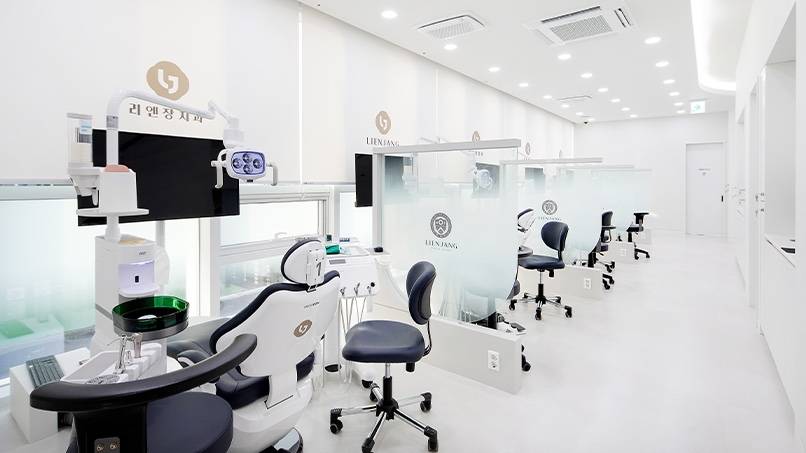
[Clinic Name] Lienjang Dental Clinic
[Location] Seoul, South Korea
[Nearest Station/ Nearest Tourist Destination] Conveniently accessible via Exit 10 of Gangnam Station line 2
[Clinic Opening Time] Monday and Friday (10:00AM – 9:00PM); Tuesday to Thursday (10:00AM – 7:00PM); Saturday (10:00AM – 4:00PM); Closed on Sunday
| Operation Time |
5 - 30 mins |
| Recovery Time |
None |
| Number of Postoperative Visit |
Not required |
| Hospitalization |
Not required |
| Limitations |
None |
| Cancellation Policy |
No charge for cancellations made at least 48 hrs prior appointment date |
| Location |
Seoul Seocho-gu Gangnam-daero 403, 343 Gangnam Tower 13F |
Terms of Service
Trambellir is a health tourism platform and does not in any way provide, promote, or sell any
medication or medical treatment to the Customers.
Customers are advised to contact the healthcare providers directly for any enquiries related to
medical treatments.